Emergency Water Extraction in McKinney, TX
When water enters your home, you want to get things under control quickly. Whether it’s a burst pipe, leaking appliance, or storm damage, we’re here to help.
At McKinney Water Recovery, we remove standing water and identify affected areas to help you take the next steps toward restoring your home.
Don’t wait for the damage to spread.
Call Now for Water Extraction

Why Acting Quickly Can Make a Difference
Water can spread beneath floors, soak carpets, and seep into walls—even when the visible puddle seems small. The longer moisture stays trapped, the more damage it can cause.
- Beneath floors
- Into carpets
- Inside walls
Our team helps remove standing water and identify affected areas so proper drying can begin. Whether a pipe bursts or water leaks through your ceiling, acting quickly can help protect your home from further damage.
What Happens During Emergency Water Extraction?
Every water damage situation is different. The amount of water, the materials affected, and the source of the leak all influence the work needed. Here’s how the extraction process can help you move forward.
Assess the Situation and Document the Damage
We start by checking the affected areas and documenting the visible damage. Moisture meters and thermal imaging can help us find hidden damp spots behind walls or ceilings. This assessment helps us understand where water has spread and plan the right steps for extraction and drying.
Identify the Source and Type of Water
Not all water damage is the same. A clean pipe leak, appliance leak, or sewage backup each requires a different approach. We assess the water source to determine the right safety measures and restoration steps. If the water may be contaminated, keep your family and pets away until the area can be assessed safely.
Remove Standing Water
We remove standing water using suitable equipment, such as powerful pumps, wet/dry vacuums, and portable or truck-mounted extractors. Removing excess water helps reduce the moisture left behind and allows us to assess affected materials before drying begins.
Check Carpets, Padding, and Flooring
Water can hide beneath carpets and flooring, leaving moisture you can’t see. We check carpets, padding, laminate, and vinyl flooring to determine whether they can be dried and saved or need to be removed. The right approach depends on the type of water, the extent of the damage, and the condition of the materials.
Prepare the Property for Drying
Removing standing water is an important step, but it does not necessarily mean the property is dry.
Moisture may remain in drywall, flooring, subfloors, insulation, and other building materials. Depending on the findings, the next stage may involve air movers, dehumidifiers, additional moisture measurements, cleaning, or removal of materials that cannot be safely restored.
The goal is to address the affected areas rather than focus only on the water that was visible at the beginning.
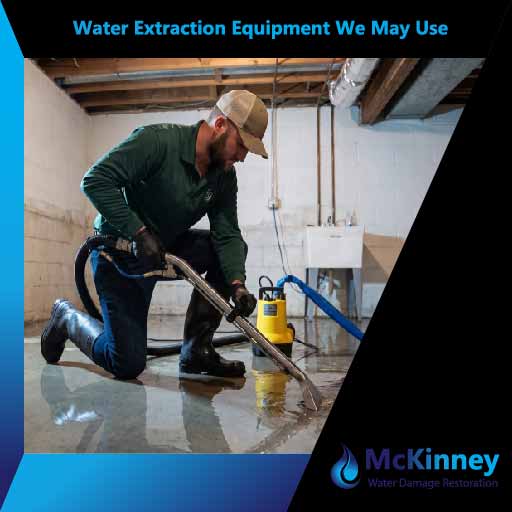
Water Extraction Equipment We May Use
The right equipment depends on the amount of water, the layout of your property, and the materials affected.
Powerful Water Pumps
Submersible pumps may be suitable when significant amounts of water have accumulated. They help remove bulk water so that the affected area can be assessed and prepared for the next steps.
Truck-Mounted Extraction Units
Truck-mounted systems can provide powerful water extraction for suitable jobs. They may be particularly useful when a substantial amount of water needs to be removed from accessible areas.
Portable Extraction Units and Wet/Dry Vacuums
Portable equipment can help reach rooms and spaces where truck-mounted equipment may not be practical. Suitable wet/dry vacuums can also remove water from accessible surfaces and smaller affected areas.
Moisture Meters and Hygrometers
These instruments help assess moisture conditions in building materials and indoor air. Measurements can guide decisions about where additional drying may be needed.
Thermal Imaging Equipment
Infrared cameras may help identify temperature patterns that suggest hidden moisture behind walls or ceilings. Their findings should be interpreted alongside other inspection methods rather than treated as proof of moisture on their own.
Can Water Extraction Save Your Carpet and Flooring?
Water damage does not automatically mean every carpet, floor, or household item must be replaced. However, not every material can be safely saved either.
Carpet and padding should be evaluated separately where appropriate. Even when the carpet surface appears to be in good condition, the padding underneath may have absorbed substantial moisture.
The outcome depends on several factors:
The type of waterContaminated water may make some porous materials unsuitable for restoration.
How long materials have remained wetProlonged moisture can make recovery more difficult.
The material itselfCarpet, padding, laminate, vinyl plank, and subfloor materials respond differently to water.
The extent of the damageWater trapped beneath flooring may require additional inspection or removal of selected materials.
A proper assessment helps determine whether cleaning and drying are suitable or whether removal and replacement are needed.
Signs you might notice:
Peeling paintA common visible sign of moisture in walls.
Ceiling stainsDiscoloration that may point to water above or inside the ceiling.
Swollen trimTrim and baseboards can swell when they absorb moisture.
Very little at allMoisture can remain hidden even when little is visible.
What If Water Has Reached Your Walls or Ceiling?
Water can spread beyond the original leak, damaging walls, ceilings, and insulation.
You might notice peeling paint, ceiling stains, or swollen trim—or see very little while moisture remains hidden.
We check affected areas to determine whether further drying, cleaning, repairs, or material removal is needed.
Finding and fixing the source is also essential to help prevent the same problem from happening again.
What About Sewage or Contaminated Floodwater?
Water contaminated with sewage or other harmful substances needs special care.
Avoid touching the water or trying to remove it with household equipment.
Keep children and pets away and seek professional help.
The right cleanup depends on:
The source of contaminationWhere the water came from affects how it needs to be handled.
The extent of contaminationHow far the water has spread determines how much needs attention.
Some materials may need to be removed rather than dried and reused.
What Happens After Water Extraction?
Once the standing water has been removed, the next steps depend on what the inspection reveals.
Structural dryingAir movers and dehumidifiers may be used to help remove remaining moisture from affected materials and indoor air.
Moisture monitoringFollow-up measurements help assess drying progress and identify areas that may need further attention.
CleaningAppropriate cleaning may be necessary depending on the source of the water and the materials affected.
Repairs and restorationDamaged drywall, flooring, insulation, or other building materials may need repair or replacement if they cannot be restored.
Extraction is the beginning of the recovery process, not a guarantee that all hidden moisture has been removed.
The affected areas should be assessed and addressed according to their actual condition.
Why Choose [McKinney Water Recovery] for Emergency Water Extraction in McKinney?
When water enters your home, you need to understand what’s happening and what to do next.
You shouldn’t have to guess whether the water has spread beneath your flooring or whether a damp wall needs further attention.
Our approach to water extraction focuses on the needs of your property:
Attention to the affected areasVisible water is only one part of the picture. Moisture checks can help identify areas that need further attention.
Equipment suited to the situationThe extraction method should match the amount of water and the conditions at your property.
Careful material assessmentCarpets, padding, flooring, drywall, and other materials may require different approaches.
A clear path to the next stepsOnce standing water is removed, the remaining drying, cleaning, and repair needs can be assessed.
Our goal is to help you understand the damage, address the water that has accumulated, and move toward restoring your home.
Frequently Asked Questions About Emergency Water Extraction
How quickly can you get to my McKinney home?
Response times depend on availability, the location, and the circumstances of the water damage. Contact [McKinney Water Recovery] to discuss your situation and confirm current availability.
Should I try to remove the water myself before you arrive?
If it is safe, you may be able to move small belongings away from the affected area and prevent access to wet spaces. However, avoid entering areas with electrical hazards, contaminated water, or structural concerns. Do not use electrical equipment in standing water.
If the source is a plumbing leak, shut off the water supply if you can do so safely. For substantial flooding or suspected contamination, seek appropriate professional help rather than attempting risky cleanup.
Will my carpet be saved?
Possibly, but it depends on the type of water, how long the carpet and padding have been wet, and their overall condition. An assessment can help determine whether cleaning and drying are appropriate or whether some materials need to be removed.
Do you charge for the initial assessment?
Assessment fees depend on the company’s service policy and the circumstances of the job. Contact [McKinney Water Recovery] to confirm whether an initial assessment is complimentary or chargeable before scheduling.
Is water extraction enough to dry my home completely?
Not always. Extraction removes accumulated water, but moisture can remain inside flooring, walls, and other building materials. Additional drying and moisture monitoring may be needed before the affected areas are ready for repairs or normal use.
Can water spread beneath tile, laminate, or vinyl flooring?
Yes. Depending on the installation and conditions, water can travel through joints, edges, gaps, or other pathways and become trapped beneath flooring. The affected area may extend beyond the visible wet spot, so further inspection may be necessary.
What should I do if the water comes from a sewage backup?
Avoid contact with the water, keep people and pets away, and do not attempt ordinary DIY extraction. Sewage-contaminated water requires appropriate precautions and specialized cleanup methods.
Does water extraction also include repairs?
Water extraction primarily focuses on removing accumulated water. Drying, cleaning, material removal, and repairs may follow, depending on the damage and the services provided by the restoration company. Ask [McKinney Water Recovery] which stages are included in your service.
Don’t Let Standing Water Wait
Water damage can leave you worried about your floors, walls, belongings, and the work needed to put things right. You don’t have to figure out every step on your own.
If your McKinney property has standing water from a burst pipe, leaking appliance, or other water-related problem, contact [McKinney Water Recovery] to discuss your situation.
Let’s identify the affected areas, remove the standing water, and help you understand the next steps toward recovery.
Call [McKinney Water Recovery] About Emergency Water Extraction