
Slab Leak Detection & Repair in McKinney, TX
A hidden slab leak can damage your home before you notice it. Warm floors, rising water bills, or damp flooring may be signs of a problem.
At McKinney Water Recovery, we help identify the source of the leak and determine the next steps to address the issue and any related water damage.
Don’t ignore the signs. Let’s find out what’s happening beneath your floors.
Call Today to Discuss a Possible Slab Leak

Signs You May Have a Slab Leak
A slab leak doesn’t always start with a puddle. Sometimes, the first sign is a change you can’t easily explain.
An Unexpected Increase in Your Water Bill
Has your water bill gone up even though your household water use hasn’t changed? A hidden leak could be one possible reason. Checking for unexplained water loss can help you determine whether further investigation is needed.
Warm Spots on Your Floor
If one section of your floor feels unusually warm, a hot-water line beneath the slab could be leaking. This isn’t proof of a slab leak, but it’s worth having the area checked.
Damp Flooring or Carpet
Moisture that keeps returning, damp carpet, or unexplained wet spots may indicate a hidden plumbing leak. Water can travel beneath flooring before becoming visible on the surface.
The Sound of Running Water
Do you hear water running when faucets and appliances are turned off? If so, there may be a leak somewhere in your plumbing system. A proper assessment can help narrow down the source.
Cracked Tiles or Changes Around Your Foundation
New cracks, uneven flooring, or changes around your foundation deserve attention. These problems can have several causes, and a slab leak should not be assumed without an appropriate assessment.
Musty Odors or Damp Baseboards
Persistent moisture can contribute to musty smells, discoloration along baseboards, or damage to nearby materials. If these signs appear without an obvious source, further inspection may be needed.
Not sure whether you’re dealing with a slab leak?
You don’t have to guess. The right assessment can help determine whether a hidden plumbing leak is responsible.
Why Slab Leaks Can Be Tricky in McKinney
McKinney’s clay-rich soil can expand and contract as moisture levels change, potentially putting stress on foundations and underground pipes. Aging plumbing and worn connections can also lead to slab leaks.
Since these pipes are hidden beneath concrete, finding the exact source takes careful inspection. Every home is different, so identifying the cause first helps determine the right repair without unnecessary guesswork.
Changing Soil Conditions
Moisture changes can cause clay-rich soil to expand and contract.
Hidden Pipe Connections
Aging plumbing and worn connections may contribute to leaks.
Finding the source comes first. Careful inspection helps identify the cause and determine an appropriate repair for your home.
Our Slab Leak Detection & Repair Process
Finding a hidden leak starts with understanding the signs and narrowing down the possible causes. The appropriate approach depends on the plumbing system, the location of the leak, and the condition of your property.
Inspect the Warning Signs
The process begins by reviewing the symptoms, such as unexplained water use, warm flooring, damp areas, or the sound of running water.
These clues help guide the investigation, but they don’t always identify the exact source on their own.
Locate the Leak
We use suitable leak detection methods, such as pressure testing, acoustic listening, and thermal imaging, to help locate hidden slab leaks.
The method depends on your plumbing system and what we find during the inspection. Not every leak requires the same approach, so identifying the source comes first.
Determine the Appropriate Repair
Once the leak is located, the right repair depends on the pipe’s condition and the leak’s location.
A plumber may repair the damaged section or reroute the pipe if needed. Every situation is different, so the solution should fit your home’s plumbing and the extent of the damage.
Address the Resulting Water Damage
Fixing the leak is only part of the job. Water may have already damaged your floors, baseboards, cabinets, or other materials.
Depending on the damage, your home may need water extraction, moisture checks, drying, or repairs. The goal is to address the leak and take care of the damage it leaves behind.
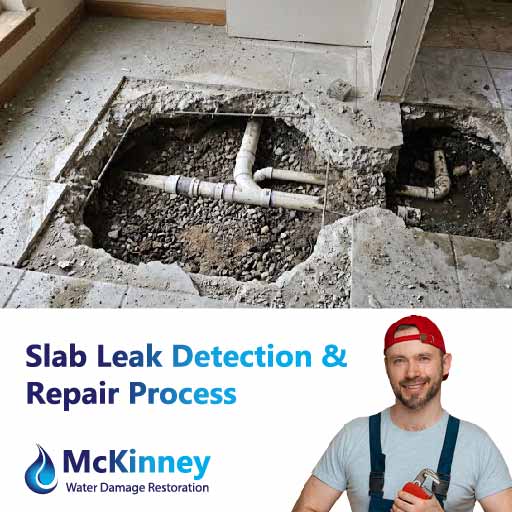
Can a Slab Leak Be Repaired Without Breaking Up the Floor?
Leak detection can help locate the problem before opening the concrete, reducing unnecessary work. However, repairing the leak may still require access to the damaged pipe, either by opening part of the floor or rerouting the pipe.
Locating the Leak First
Leak detection helps identify the problem area before deciding where access may be needed. This can help reduce unnecessary work during the repair process.
Helps narrow down the location of the hidden pipe leak.
Can help avoid unnecessary opening of concrete during investigation.
Choosing the Right Repair
Repairing the leak may still require access to the damaged pipe. The appropriate option depends on where the leak is located and the condition of the plumbing.
Opening part of the floor may be necessary to reach the damaged pipe.
Rerouting the pipe may be considered when appropriate.
The Right Solution Depends on Your Home
The best option depends on the leak’s location, pipe condition, and your home’s structure. A qualified plumber can explain the available repair options before work begins.
What Should You Do If You Suspect a Slab Leak?
If you notice signs of a possible slab leak, taking a few sensible steps can help you avoid making the situation worse.
Check for Unexplained Water Use
If all taps and water-using appliances are off, observe your water meter if you can do so safely. Continued movement may indicate water loss somewhere in the system, but it won’t identify the source.
Pay Attention to Recurring Moisture
Note where dampness, warm flooring, or discoloration appears and whether it returns.
Avoid Ignoring the Warning Signs
A hidden leak can continue affecting building materials while the source remains unresolved.
Contact an Appropriate Professional
A plumbing professional can investigate the suspected leak and advise you on suitable repair options.
Address Water Damage as Needed
If flooring, walls, or other materials have become wet, additional assessment and drying may be necessary.
Act Quickly If Water Is Spreading
If water is spreading rapidly or the leak appears substantial, shut off the water supply if it is safe to do so and seek prompt assistance.
Frequently Asked Questions About Slab Leak Detection & Repair
Find answers to common questions about slab leak causes, warning signs, detection methods, repair options, and water damage.
What causes a slab leak?
Slab leaks can result from pipe corrosion, damaged plumbing, worn connections, installation issues, or stress affecting pipes beneath a foundation. The cause varies from property to property and needs to be assessed.
Will a slab leak make my water bill go up?
It can. A hidden leak may cause unexplained water loss, which can increase your bill. However, higher water use and other plumbing problems can also affect water costs.
Can I have a slab leak without seeing water on the floor?
Yes. Water may remain beneath flooring, move into nearby materials, or escape into areas where it isn’t immediately visible. Some leaks first become noticeable through changes in water use, warm flooring, or unusual sounds.
How is a slab leak detected?
Depending on the situation, a qualified professional may use pressure testing, acoustic listening equipment, thermal imaging, or other suitable methods to investigate and locate the leak.
Does every slab leak require cutting into the concrete?
No single repair method applies to every case. The location and condition of the pipe determine whether direct access or an alternative repair approach is appropriate. Some repairs may still require opening a section of the slab.
What happens after the leak is repaired?
The affected areas should be checked for moisture and damage. Depending on the findings, the property may need water extraction, drying, cleaning, or repairs to flooring, baseboards, cabinets, or other materials.
Can a slab leak damage my flooring and walls?
Yes. Escaping water can affect flooring and nearby building materials. The extent of the damage depends on the amount of water, how long the leak continues, and the materials involved.
When should I call for help?
Contact an appropriate professional if you notice unexplained water loss, recurring dampness, unusually warm flooring, or other signs of a possible hidden leak. Prompt investigation can help you understand the cause and determine the next steps.
Let’s Find the Source of the Problem
Discovering a possible slab leak can leave you wondering about your plumbing, flooring, and the cost of repairs. You deserve clear information about what’s happening and what to do next.
At [McKinney Water Recovery], our goal is to help you move from uncertainty toward a practical solution. Whether the concern is unexplained moisture or a suspected leak beneath your concrete foundation, the first step is understanding the problem.
Contact McKinney Water Recovery today to discuss your slab leak concerns in McKinney, TX, and learn which services are appropriate for your property.
Call Now to Discuss Slab Leak Detection & Repair