
Attic Water Damage Repair in McKinney, TX
Water damage in your attic can be easy to miss until it starts affecting other parts of your home. A roof leak, damaged pipe, or condensation can leave insulation wet, damage wooden structures, and cause stains on your ceilings.
At McKinney Water Recovery, we help identify affected areas, remove water-damaged materials when needed, and address moisture to help protect your home from further damage.
Call Now for Attic Water Damage Help
What Causes Water Damage in an Attic?
Attic water damage can come from several sources. Sometimes the problem starts with the roof, while in other cases, plumbing or ventilation issues are responsible.
Common causes include:
Roof leaks
Damaged shingles, flashing, or roof valleys can allow rainwater to enter.
Damaged seals
Worn seals around skylights, vents, chimneys, and roof openings can let water inside.
Clogged gutters
Blocked gutters can cause water to back up and find its way beneath roofing materials.
Plumbing leaks
Pipes or connections running through the attic can leak and soak nearby materials.
HVAC condensation
Drainage problems or poorly insulated ducts can lead to unwanted moisture.
Poor ventilation
Warm, humid air can build up in the attic and create condensation on cooler surfaces.
Finding the source is important because drying the attic without addressing the leak can lead to the same problem again.
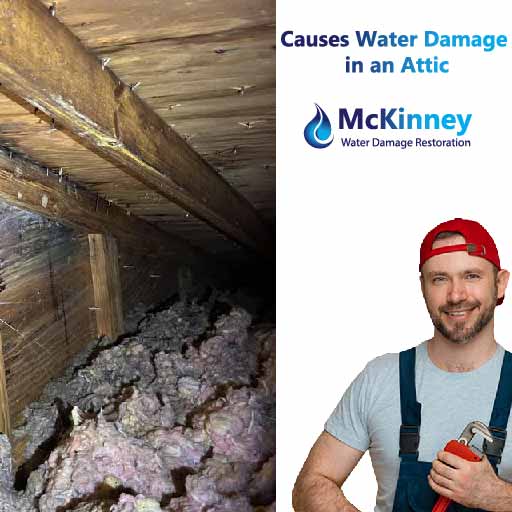
Signs of Water Damage in Your Attic
You may not visit your attic often, but a few warning signs can help you spot a problem before it spreads.
Look for:
- Wet or compressed insulation
- Dark stains on roof sheathing or wooden beams
- Musty odors coming from the attic
- Water stains or peeling paint on ceilings
- Damp spots around vents, chimneys, or skylights
- Rust around exposed nails or metal components
- Visible mold or mildew
After rainfall: if you notice ceiling stains or damp insulation, water may be entering through the roof.
However, the visible damage may not be directly below the leak because water can travel along framing and other surfaces.
Why Attic Water Damage Needs Prompt Attention
Your attic contains materials that can absorb and hold moisture. Wet insulation may lose its effectiveness, while prolonged moisture exposure can damage wooden framing and roof sheathing.
Water can also move downward into ceilings and walls, affecting rooms below. If moisture remains trapped, it can create conditions that support mold growth.
Taking care of the problem early helps limit the spread of water and makes it easier to identify which materials need drying, cleaning, or replacement.
Call Today to Discuss Attic Water DamageOur Attic Water Damage Repair Process
-
Step 1
Inspecting the Attic
We assess the affected areas to understand how far the water has spread. This may include checking insulation, roof sheathing, wooden framing, and nearby ceilings for visible signs of moisture.
-
Step 2
Identifying the Water Source
The next step is to understand where the water is coming from. Roof damage, plumbing leaks, and HVAC condensation can all cause attic moisture. The source needs to be addressed to prevent further water intrusion.
-
Step 3
Removing Wet Materials
Water-damaged insulation and other materials may need to be removed if they cannot be properly dried or are too damaged to keep. The decision depends on the material’s condition and the type of water involved.
-
Step 4
Drying the Affected Areas
Air movers and dehumidifiers can help remove moisture from the attic and affected building materials. Moisture checks help track drying progress and identify areas that may need additional attention.
-
Step 5
Addressing Related Damage
Water may have reached ceilings, walls, or other parts of your home. We assess the affected areas to determine whether additional drying, material removal, or repairs are needed.
Can Attic Water Damage Lead to Mold?
Yes. When insulation, wood, or other materials stay wet, they can create conditions that allow mold to grow.
Attics can be particularly difficult because moisture may remain hidden behind insulation or along roof structures. A musty smell, visible spots, or damp materials may indicate a moisture problem.
If mold is present, the affected area may need a separate assessment and appropriate remediation. Simply drying the visible surface may not address the entire problem.
What Should You Do When You Find Water Damage in Your Attic?
Finding water in your attic can be stressful, but taking a few careful steps can help limit further damage.
Stay safe: Avoid entering the attic if you notice sagging ceilings, damaged wiring, standing water near electrical components, or unstable flooring.
Look for the source: If it is safe, note whether the moisture appears near the roof, plumbing, or HVAC equipment.
Limit further water entry: Contact a qualified roofing or plumbing professional to address the source of the leak.
Protect your belongings: Move stored items away from wet areas if you can do so safely.
Arrange an assessment: Have the affected materials checked to determine whether water removal, drying, or replacement is needed.
Avoid handling wet electrical components or disturbing potentially contaminated materials yourself.
How to Prevent Future Attic Water Damage
Regular home maintenance can help reduce the risk of attic leaks and moisture buildup.
Outdoor Maintenance
- ✓ Keep gutters and downspouts clear of leaves and debris.
- ✓ Check roof shingles and flashing for visible damage.
- ✓ Trim tree branches that hang close to your roof.
- ✓ Pay attention to roof areas around chimneys, skylights, and vents.
- ✓ Arrange roof inspections when needed, especially after severe storms.
Indoor Maintenance
- ✓ Make sure bathroom and kitchen exhaust fans vent outdoors.
- ✓ Check attic plumbing and HVAC components for signs of leaks.
- ✓ Look for damp or damaged insulation.
- ✓ Maintain proper attic ventilation.
- ✓ Address unusual moisture or musty odors before they become bigger problems.
Stay Ahead of Water Damage: Regular checks can help you catch small issues before they cause extensive damage.
Frequently Asked Questions
What is the most common cause of attic water damage?
Roof leaks are a common cause. Damaged shingles, flashing, roof openings, and clogged gutters can allow rainwater to enter. Plumbing leaks and HVAC condensation can also cause attic moisture.
Can attic water damage affect the rooms below?
Yes. Water can move through insulation, ceiling materials, and wall cavities. You may notice stains, peeling paint, or damp drywall in rooms directly below the attic.
Does wet attic insulation need to be replaced?
Not always. Some materials may be suitable for drying, while others may need removal and replacement depending on their condition and the type of water involved.
How long does attic water damage repair take?
The time depends on the source of the leak, the amount of water, and the materials affected. Drying, insulation replacement, and structural repairs may each require different amounts of time.
Should I repair the roof before drying the attic?
The source of the water needs to be addressed so more water does not enter during the drying process. Roof repairs should be handled by a qualified roofing professional.
Need Attic Water Damage Repair in McKinney, TX?
A small attic leak can affect more than the space above your ceiling. If you’ve noticed wet insulation, roof stains, or signs of water damage, don’t leave the moisture unchecked.
Contact McKinney Water Recovery to discuss the damage and find out what steps may be needed to protect your home.
Contact Us Today →